Adventures around New Mexico

  • The Ultimate Guide to Fall in Los Alamos: Hikes, History, and Hills Full of Gold 

    The Ultimate Guide to Fall in Los Alamos: Hikes, History, and Hills Full of Gold 


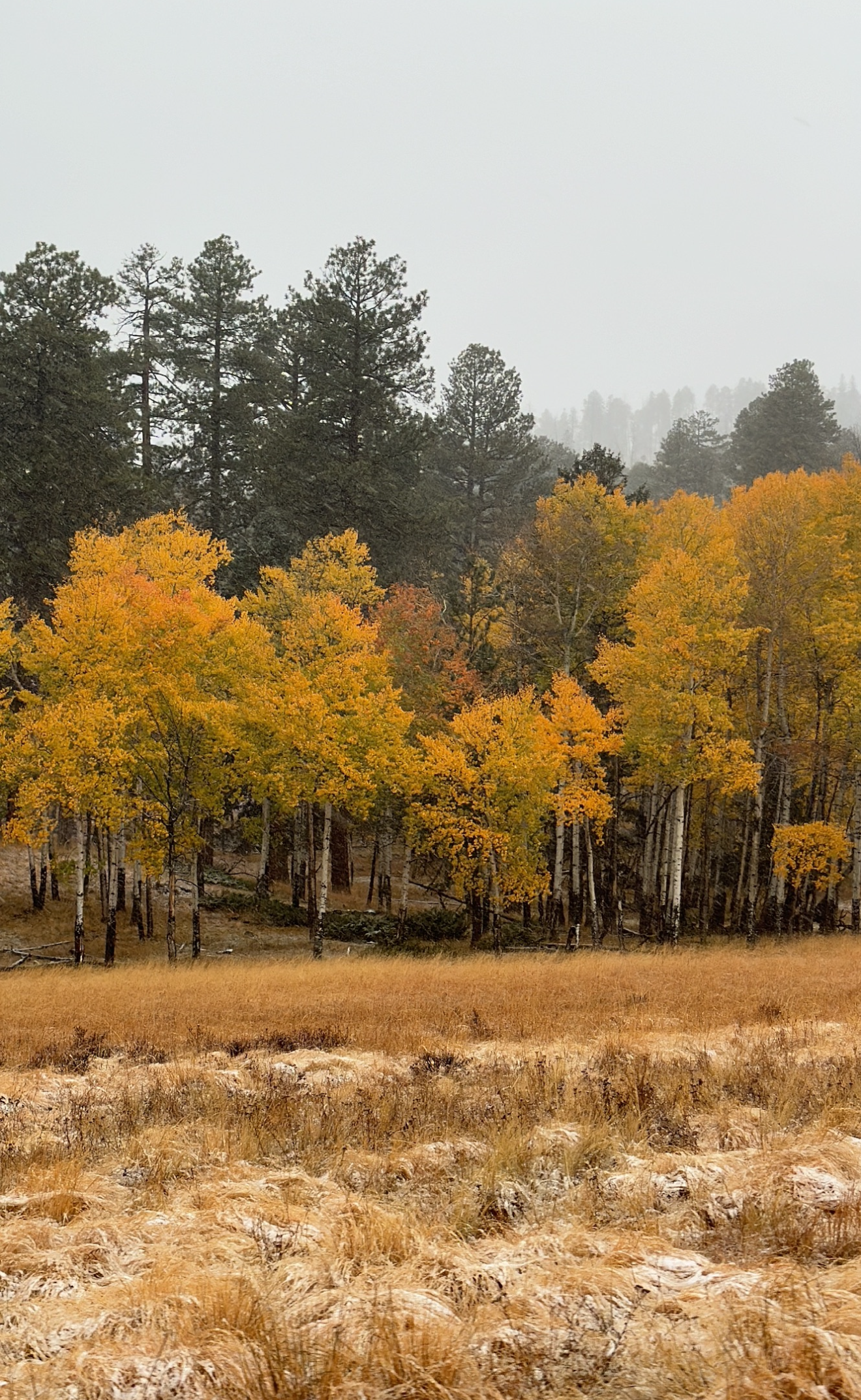
    Autumn in Los Alamos, New Mexico is a dream: the air is crisp, the town’s namesake cottonwood trees are glowing gold —“Los Alamos” means “the cottonwood trees” in Spanish— the aspens are turning in the mountains above town, and the weather is perfect for both hiking and history tours. What’s not to love?!

    Here are some of my favorite things to eat, see and do in Los Alamos this fall.


    How to get to Los Alamos


    The small, science-loving town of Los Alamos is an easy 90-minute drive from Albuquerque and just 45 minutes from Santa Fe. If you’re coming from Albuquerque, I recommend taking NM-4 through the Jemez mountains for the best scenery, which will also take you through Valles Caldera —more on that below!— on your way into town. 


    Basecamp for Bandelier National Monument and Valles Caldera

    Los Alamos is a town surrounded by nature, with two world-class national parks —Bandelier National Monument and Valles Caldera National Preserve— literally right next door. I highly recommend visiting both parks on your visit, which you can combine into one adventurous day out. 


    Visiting Bandelier from Los Alamos

    Bandelier National Monument is home to ancestral Puebloan sites from 1150 BCE, including trails that bring you up steep stone steps and wooden ladders to the caves themselves. The Visitor Center exhibits are well worth a stop, as is the on-site restaurant, Sirpheys. (Seriously, Sirphey’s food is the best I’ve had in a national park — more on that below.) 

    Pueblo Loop Trail: This easy 1.5 mile loop gives you the best overview of Bandelier, with trails and ladders leading into the cavates (small human-carved caves) and around several kivas. In the fall, climbing into the cavate at the top of the loop gives you a gorgeous view of the golden cottonwoods in the canyon below.

    Alcove House Trail: Climb 140 feet above Frjioles Canyon for incredible views of an ancestral site, accessible only by a series of steep ladders. (For those with a fear of heights, stick to the Pueblo Loop Trail.) The Alcove House was closed for flooding when we visited, but it’s now re-opened and looks amazing! 

    Visiting Valles Caldera from Los Alamos 


    Valles Caldera National Preserve is one of the newest national park sites in the country, established in 2000. A volcanic explosion formed the caldera, or crater, over 1 million years ago — which is actually quite young by volcanic standards!

    Today, Valles Caldera is a wonderful place for wildlife watching, stargazing, and hiking. Herds of elk roam the valleys, while coyotes, bobcats and even bears can be seen if you’re lucky.

    Touring the Valles Caldera Backcountry: From May 15-November 15, you can book a pass to explore the backcountry of Valles Caldera by car. This narrow, rocky route is worth it for those with a sense of adventure — we only drove the first few miles and it was stunning! Backcountry vehicle passes are available at Recreation.gov, with just five passes per day available for first-come, first-served visitors at the Valles Caldera Welcome Station. 

    Sulphur Springs: Only opened in 2020, Sulphur Springs is a geological wonder you won’t find anywhere else in the southwest: boiling mudpots, steaming vents, and the strong smell of sulfur. It’s like a miniature Yellowstone National Park, but in New Mexico! You can’t swim in the hot springs —not that you’d want to, because they’re so hot and acidic— but walking around the abandoned buildings and mudpots is spook-tacular good fun.

    Spence Hot Springs: While you can’t soak at Sulphur Springs, just a few minutes down NM-4 from Sulphur Springs is a short, easy hike to Spence Hot Springs: a small, soakable natural hot spring and sauna cave. The temperature stays warm year-round, making it a fun fall or winter hike. (Leave No Trace, pack out all your trash, and leave the area better than you found it!) 

    History and Science in Los Alamos 

    If Los Alamos feels like a hidden gem, that might be because it was literally hidden for years during WWII. It was the “Secret City” where Oppenheimer and his scientists created the atomic bomb, and you can still explore that history at the Manhattan Project National Historic Park.

    Stop by the park’s Visitor Center to speak with a park ranger or volunteer docent and get a good overview of the sites. From there you can visit the historic log cabin-style Fuller Lodge, where the 2023 Oppenheimer movie was filmed, and snap a selfie with the statues of General Leslie Groves and J. Robert Oppenheimer out front.

    Next, walk by the historic homes at Bathtub Row, including the Hans Bethe house, which houses historic artifacts and exhibits. (During the Manhattan Project, most scientists lived in makeshift military housing and only the top brass like Oppenheimer had houses with bathtubs, hence the name “Bathtub Row.”) You might spy a replica Army automobile parked outside one of the homes!

    You can also walk around the exterior of Oppenheimer’s house from the time —the inside is under construction— and peek in the windows for a glimpse of the replica period furniture used in the Christopher Nolan movie. Near Oppenheimer’s house is the Los Alamos History Museum, which covers both the Manhattan Project and Ancestral Puebloan history of the area.

    The Bradbury Science Museum is the closest that modern-day visitors can get to the actual Los Alamos National Laboratory, with kid-friendly exhibits about the lab’s science past and present. The Los Alamos Nature Center is another great kid-friendly stop, with a fun planetarium and live animals on display.

    Where to Eat in Los Alamos

    I was so impressed with the quality of the restaurant scene in Los Alamos, especially for a town of its size!

    Some of my favorite restaurants include: 

    Beef and Leaf: Your ideal date night spot, Beef and Leaf is the fanciest sit-down restaurant in Los Alamos — but “mountain town casual” attire is still welcome. We loved the buttermilk fried chicken with hot honey and the short rib beef stroganoff. Don’t forget dessert: the crème brûlée was fabulous! They also have a lovely cocktail menu and are open for a yummy weekend brunch.

    Blue Window Bistro: Conveniently located within walking distance of the historic Fuller Lodge, Ashley Pond Park, and the Manhattan Project National Historic Park Visitor Center, Blue Window Bistro is the perfect spot for a leisurely lunch between sightseeing. Get their house-made chicken salad sandwich on a croissant with a cup of soup. Closed weekends.

    El Parasol: A true New Mexican classic, El Parasol is known for their tacos, burritos, and enchiladas (red or green). It’s hard to pick a favorite, but the carne adovada breakfast burrito and the pork green chile verde are always a good idea.

    Yuan’s Dumpling and Noodle House: Right next door to the Bradbury Science Museum is the best spot in town for bibimbap, curry rice, and all kinds of mouth-watering dumplings (fried, steamed, or boiled). There are no wrong orders here, but I highly recommend the fried pork dumplings and the beef noodle soup with bak choy.

    Wolf and Mermaid Cafe: Eclectic coffee shop for people-watching and creative barista blends. Their house-made horchata hits the spot on a crisp fall day.

    Sugar & Cream: A bustling coffee shop across the street from Fuller Lodge with fun seasonal drinks and fresh pastries.

    Ruby K’s Bagel Cafe: Fresh morning bagels and breakfast sandwiches in a wide variety of flavors, from the traditional Everything, Onion and Poppyseed to the traditionally New Mexican green chile bagel.

    Sirphey’s Cafe at Bandelier National Monument: Hands down the best restaurant I’ve been to inside a National Park! It’s not often you can get a fresh, tasty salad, local wine, Indian fry bread, AND gourmet Indian food in the wilderness like this, but Sirphey’s delivers. After we hiked the Pueblo Loop, my fiancé had the Doug Burger, a green chile bison burger with chile relleno, and I had the chicken curry with fresh naan and a mango lassi — what luxury! We even had sipping chocolates for dessert. 

    Note: since Los Alamos is a small town, restaurants do close on the early side, and some favorites (like Blue Window Bistro and Yuan’s Dumping House) are closed on weekends. Call ahead to confirm hours if you can and plan to eat dinner no later than ~7pm. 

    A snowy, beautiful Oktoberfest at Ski Pajarito.

    Fall Events in Los Alamos 

    Oktoberfest: In mid October, Ski Pajarito hosts an Oktoberfest with local beer from around the state, games and live music. It’s the perfect chance to leaf peep from the top of the mountain with aspens peaking all around you.

    Ullrfest: Typically the third weekend of September, Ullrfest is Ski Pajarito’s ode to the coming winter. “Ullr” is the Norse god of snow and winter, so Viking costumes are encouraged!  

    Fall Fiesta at Valles Caldera: Usually the last weekend in September, this is a great chance to catch a ranger program, go on a guided hike, shop local artisan goods or catch a cultural performance from Jemez Pueblo. 

    Los Alamos ScienceFest: Usually the third weekend in September, this kid-friendly educational event hosts hands-on science experiments at Ashley Pond, with lectures and events happening all around town. 

    Where to Stay in Los Alamos 

    We stayed at the lovely Pueblo Canyon Inn, a cozy bed and breakfast in the hills just 5 minutes from the center of town. The common areas include a sitting room, billiards table, outdoor garden and library, plus a communal kitchen with an impressive continental breakfast spread.

    We loved chatting with the owners and other visitors in the evenings, but if you prefer a more traditional hotel, the Hampton Inn & Suites and the Holiday Inn Express in town are also great options close to everything.

    (While you can technically make Los Alamos a day trip from Albuquerque or Santa Fe, I recommend staying in town at least one night to take advantage of sunset at Anderson Overlook and/or sunrise with the wildlife at Valles Caldera. Plus, that way you can slow down and enjoy it without spending all day in the car!)

    Woman enjoys the view from the Anderson Overlook in Los Alamos, New Mexico


    Best Sunset Spots in Los Alamos 

    The Anderson Overlook and Anniversary Trail in Los Alamos have panoramic views of the pastel desert landscape that make northern New Mexico so unique. I caught picture-perfect sunsets from both stops! The nearby White Rock Overlook is another winner, but you can usually get a great view from anywhere near town that faces west. 


    Questions about visiting Los Alamos in the fall, or any other time of year? Let me know on Instagram and I might add it to the guide!   
  • The Ultimate Guide to Hiking Tent Rocks, New Mexico in 2025

    The Ultimate Guide to Hiking Tent Rocks, New Mexico in 2025

    New Mexico’s best hike is open again after a 4-year closure

    If you Google “best hikes in New Mexico,” one hike gets mentioned again and again: Tent Rocks, part of Kasha-Katuwe Tent Rocks National Monument.

    But for over four years, from 2020 until November 2024, that hike was closed the public. Overcrowding, disrespectful behavior, illegal camping, litter and more led Cochiti Pueblo to close access to the trail.

    For four years, New Mexicans couldn’t access New Mexico’s best hike — all due to the bad behavior of a few people who went off trail, left litter, and ignored trail closures. (While the Tent Rocks formation itself is federal land, the land surrounding it — and the only ways in — are owned and operated by Cochiti Pueblo.)


    Finally, in November 2024, Cochiti Pueblo worked with the Bureau of Land Management (BLM) to re-open access to Tent Rocks. As part of the agreement, they launched a new online permit system to prevent overcrowding and encourage respectful behavior.

    I hiked Tent Rocks for the first time in November 2024 and absolutely loved it. It just might be my favorite hike in New Mexico! I shared my experience on Instagram and received hundreds of questions about the new permit process. This post will answer all those questions and more.

    If you choose to visit Tent Rocks, please follow all the rules and leave the area better than you found it. Let’s keep Tent Rocks open to the public this time!


    How to Get a Permit for Tent Rocks in 2025

    In 2025, you need two separate reservations to visit Tent Rocks. Visits are by reservation only, and you will be turned away if you don’t have a reservation ahead of time.

    1. BLM Reservation: First, make a reservation on recreation.gov. A limited number of tickets are available each day, and tickets for all of 2025 are currently available (as of February 14, 2025.)

    Each ticket is $5 per person (free for kids under 16). If you have an annual America the Beautiful Pass, you can waive this $5 fee for yourself and up to three additional visitors. However, you still need a reservation, and will still need to pay the $20/person Cochiti Pueblo Tribal Access fee.

    2. Cochiti Pueblo Tribal Access Pass: After your BLM reservation is secured, you must buy a separate pass from Cochiti Pueblo. That ticket is $20/person over age 16, $10/person 2-16 years old, and free for visitors under 2 years old. You’ll get a link to purchase the Tribal Access Pass after your BLM pass is confirmed.

    On our visit, you were also able to purchase the Tribal Access Pass on-site at the Cochiti Pueblo Visitor Center. You can’t buy the BLM reservation in person, though, so it’s best to buy both passes ahead of time.

    The America the Beautiful Pass cannot be used to waive the fees for a Cochiti Pueblo Tribal Access Pass, so the least that an adult will pay to visit Tent Rocks is $20.

    EntityFee for visitors over 16 years oldFee for 2-16 year oldFee for 0-2 year old
    BLM Ticket Reservation – via Rec.gov$5 per visitor$0 per visitor$0 per visitor
    Cochiti Pueblo Tribal Access Pass – via Purple Pass (TR 92 Access Fee)$20 per visitor$10 per visitor$0 per visitor


    Importantly, Tent Rocks reservations are only available Thursday though Monday, February 1 – December 13 2025. Tent Rocks is also closed on the following days:

    Friday before Easter

    Saturday before Easter

    Easter Sunday

    Monday after Easter

    May 3

    July 13 and 14

    July 25

    Nov. 1

    Thanksgiving Day

    Dec. 15 – Jan. 31 (seasonal closure)

    As of February 2025, there are still slots available for almost all days of 2025, but those will likely fill up quickly. If you want to go this year, I recommend booking as soon as possible!


    What’s the Best Hike to do at Tent Rocks?

    There are two main hikes at Kasha-Katuwe Tent Rocks National Monument: the Cave Loop Trail and the Canyon Trail. For the best of both worlds, I recommend taking the Canyon Trail all the way up to the top, then taking the Cave Loop Trail back. Here’s that option on AllTrails.

    The total distance of my recommended route is 3.3 miles with 823 elevation gain: not easy, but not very hard either! There are a few places where you’ll want to use your hands to scramble up rocks, but you don’t need to be a climber.


    On the 1.5-mile hike up the Canyon Trail, you’ll enter a gorgeous slot canyon, followed by a steep climb up to the top of the mesa. Looking down on the hoodoos you were just looking up at and down into the narrow canyon walls you just hiked through is an incredible experience!

    While the Canyon Trail trail is steep in sections, the switchbacks make it manageable. You don’t have to be in amazing shape — just take it slow.


    On a clear day, which is most days in northern New Mexico, you’ll be able to see many mountain ranges, including the Sangre de Cristos near Santa Fe, the Jemez mountains near Los Alamos, and the Sandia mountains near Albuquerque.

    Then, on your way back down, take the Cave Loop Trail back to the parking lot. This only adds a short .2 mile extra to your original route, but takes you by different scenery for the last stretch of the hike. On the Cave Loop Trail, you’ll pass a cave (hence the name) or cavate, a hand-hewn living area carved into the volcanic rock.


    While you can’t enter the cave itself like you can in nearby Bandelier National Monument, it’s still cool to see!

    How to get to Tent Rocks from Albuquerque

    All visitors must first check in at the Cochiti Pueblo Visitor Center, which is on Google Maps. Navigate there, not to the monument itself.

    From Albuquerque, take I-25 North and take exit 259 for Santo Domingo/Cochiti Lake Recreation Area, then get on NM-22. When you see Cochiti Visitor Center, turn right.

    After you arrive at the Cochiti Pueblo Visitor Center and check in, you’ll wait for a pilot car to guide you to Tent Rocks itself.

    Check in begins no earlier than 7:45 a.m. with pilot vehicles leading visitors into the Monument starting at 8:00 a.m. The last pilot car will leave the Cochiti Visitor Center at 1:00 p.m.


    What is a “tent rock”?

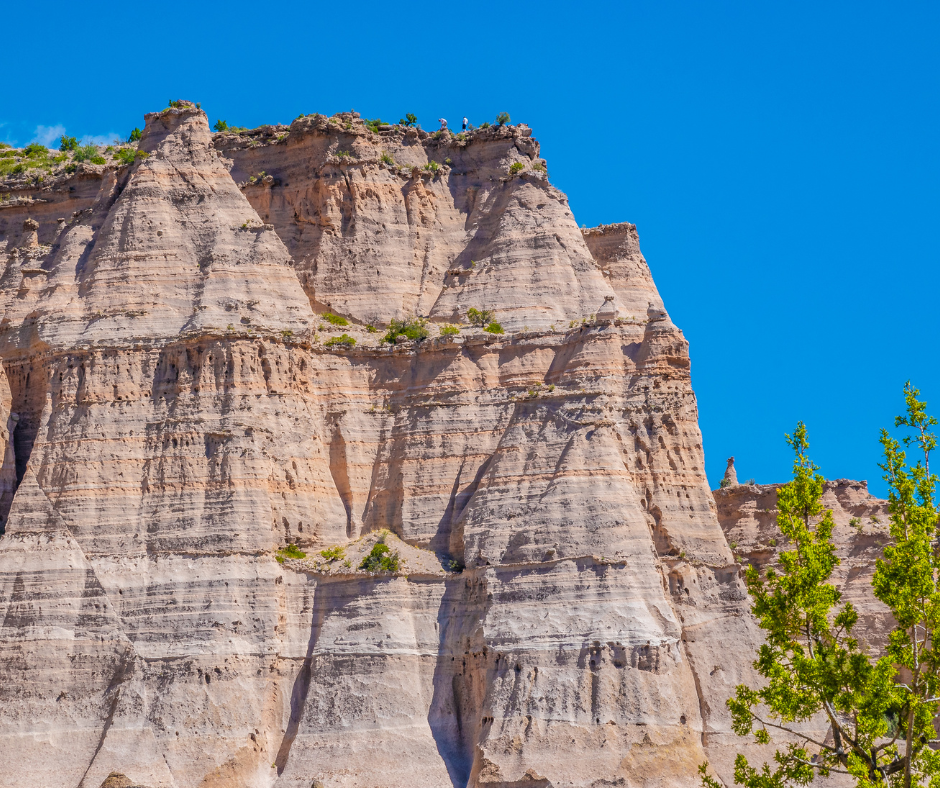
    Volcanic eruptions + time = tent rocks!

    Each cone-shaped hoodoo or “tent rock” is the result of volcanic eruptions 6-7 million years ago, which left 1,000-foot thick tuff deposits on the Pajarito Plateau.

    Millions of years of erosion helped shape the tent rocks, with harder stone at the top protecting the softer stone below.

    The tallest formations are over 90 feet tall!

    What should I bring to hike Tent Rocks?

    Tent Rocks is in a remote, rural area of New Mexico, with no access to food, restaurants, or water nearby. Pack like you’ll be gone all day, with more water and snacks than you think you’ll need!

    I recommend packing:

    • At least 1 liter of water per person- no water is available at the monument
    • Snacks or a picnic lunch to enjoy on the trail, at the top or at the picnic tables in the parking lot
    • Sunscreen – there is no shade on the trail
    • Sunglasses
    • Hiking poles (optional) and ice spikes if you’re hiking in winter or early spring, as there may be ice on the trail
    • Layers, including a waterproof layer. Even in the desert, storms can hit at any moment, especially during the summer monsoon season.
    • Money for souvenirs – there’s a small Tent Rocks-themed gift shop at Cochiti Visitor Center


    When do Tent Rocks permits go on sale?

    As of February 2025, all permits for the rest of 2025 are currently available. Tickets will likely sell out, especially on weekends and school breaks, so grab your tickets in advance while you can.

    What time should I arrive at Tent Rocks?

    Check in begins no earlier than 7:45 a.m., and the last pilot car will leave the Cochiti Visitor Center at 1:00 p.m. All visitors must exit the monument by 4:00 p.m, and Cochiti Pueblo is strict about that deadline: by 3:00p.m., they start turning people back towards the parking lot and will not allow you to continue hiking up.

    The BLM recommends that to do the full hike, you should arrive at the Cochiti Pueblo Visitor Center no later than 1p.m.

    However, if you want to hike slowly and enjoy the scenery, I recommend arriving no later than 11a.m., or even earlier, to get your full $25 worth.


    Is camping allowed?

    No, there is no camping allowed at Tent Rocks — despite having “tent” in the name! 🙂 But at only 1.5 hours from Albuquerque, it’s the perfect distance for a day trip.

    If you do prefer to camp nearby, Cochiti Campground at Cochiti Lake is only 10 minutes away! ($15/night for non-electric campsites and $20/night for electric sites).


    Are dogs allowed?

    No, dogs are not allowed at Tent Rocks. (Service dogs trained to assist with a specific disability are the exception. Emotional support animals are not allowed.)

    Please respect the rules and leave your pup at home!

    Are there bathrooms available?

    Yes! There are pit toilets (no flush) available at the trailhead, near the parking lot and picnic tables. There are no toilets on the trail, however, so use the facilities before you start your hike.

    Can I fly my drone?

    No, drones are not allowed at the Tent Rocks formation or anywhere inside Kasha-Katuwe Tent Rocks National Monument.

    The trail goes above the hoodoos, though, so you can still get great views of the formation (like this!) from above.


    Can I climb a Tent Rock (hoodoo)?

    No, climbing the rocks is prohibited. The rocks are made of crumbly sandstone, so the formations are fragile and susceptible to damage if people climb on top.

    Please respect the rules and stay on trail so Tent Rocks can remain open to the public!

    Ugh, $25 a person?! Is Tent Rocks really worth it?

    Yes, it’s a pricey hike, especially compared to most (free) hikes in New Mexico — but Tent Rocks it’s definitely worth doing at least once! There’s nowhere else in New Mexico with such an impressive collection of hoodoos in such a small area. In fact, there are only a couple places like it in the world!


    To save a few bucks, you can get an annual America the Beautiful Pass ($80/year) which covers you and three additional visitors. That means you and three friends can save $5 each! However, you all still need the $20/person Cochiti Pueblo Tribal Access Pass, so it’s still an expensive hike.

    I’m glad I hiked Tent Rocks, but because of the cost and hassle of booking a ticket I won’t be doing this hike very often. I’m just happy it’s open again after such a long hiatus!

    Is Tent Rocks visible from the road?

    No, you can’t see any of the Tent Rocks formation from the road or parking lot. If you don’t have a reservation to do the hike, it’s not worth making the trip.

    What’s the best time of year to hike Tent Rocks?

    Tent Rocks is beautiful year-round, but the best times to hike are in the spring and fall, when temperatures are mild and there is no snow on the ground. I hiked it in late November and the weather was perfect: 50s in the middle of the day, bright and clear.


    The summer heat at Tent Rocks can be brutal, with temperatures in the 90s or higher. There is no shade at all on the trail, so be prepared for intense sun and pack plenty of water for everyone in your group. Summer monsoons can also flood the trail and cause dangerous lightning strikes.

    Winter weather at Tent Rocks is often sunny and warm, but can also be below freezing and snowy. After a snowstorm, the trail can get ice-packed and dangerous.

    Ready to hike Tent Rocks?

    Even though I grew up in New Mexico, I only hiked Tent Rocks for the first time in November 2024. Now, it’s one of my favorite hikes in the state!

    If you choose to visit Tent Rocks, please follow all the rules and leave the area better than you found it. Let’s keep Tent Rocks open to the public this time!

  • Eating the Alphabet in ABQ: A-Z Restaurant Challenge

    I love that pretty much every week, there’s a new restaurant to try in Albuquerque! It’s easy to stick to my tried-and-true favorites, but I also love discovering new spots around town.

    To encourage myself to get out (and eat out) more, I started an A-Z restaurant challenge. Over the course of the year, I plan to visit a local restaurant for every letter of the alphabet!


    A – A-ri-rang Oriental Market
    B – Barelas Coffee House
    C – Central Bodega
    D
    E
    F
    G
    H
    I
    J
    K
    L
    M
    N
    O
    P
    Q
    R
    S
    T
    U
    V
    W
    X
    Y
    Z

  • Welcome to ABQ Adventures!


    Sign up for my email list to get the best things to eat, see and do around New Mexico!